


Eating Correctly in the African American Community of Kankakee County, Illinois
Eating healthy is one of the most powerful ways to build stronger families and communities. In places like Kankakee County, Illinois, where culture, faith, and community ties run deep, nutrition is not just about food, it’s about tradition, access, and long-term health. For many African American residents, eating correctly means balancing cultural foods with modern health knowledge while navigating real-world challenges like cost and availability.
Across the United States, African American communities face higher rates of diet-related illnesses such as obesity, diabetes, and high blood pressure. Research shows that African American adults are more likely to experience these chronic conditions, often linked to diet quality and access to healthy food.
At the same time, many individuals consume fewer fruits, vegetables, and whole foods than recommended, while diets may include higher amounts of processed foods, sugar, and sodium. These patterns are not simply about personal choices, they are influenced by environment, economics, and access.
Barriers in Communities Like Kankakee County
Healthy eating can be more difficult in communities where, grocery stores with fresh produce are limited, fast food is more accessible than fresh food, healthy options cost more or require more travel and time constraints make cooking harder.
Studies highlight that many African American communities face “food deserts,” where residents must travel farther to access quality groceries . These barriers are real in many parts of Illinois, including smaller cities and counties like Kankakee.
A major misconception is that eating healthy means abandoning traditional African American foods. That’s not true.
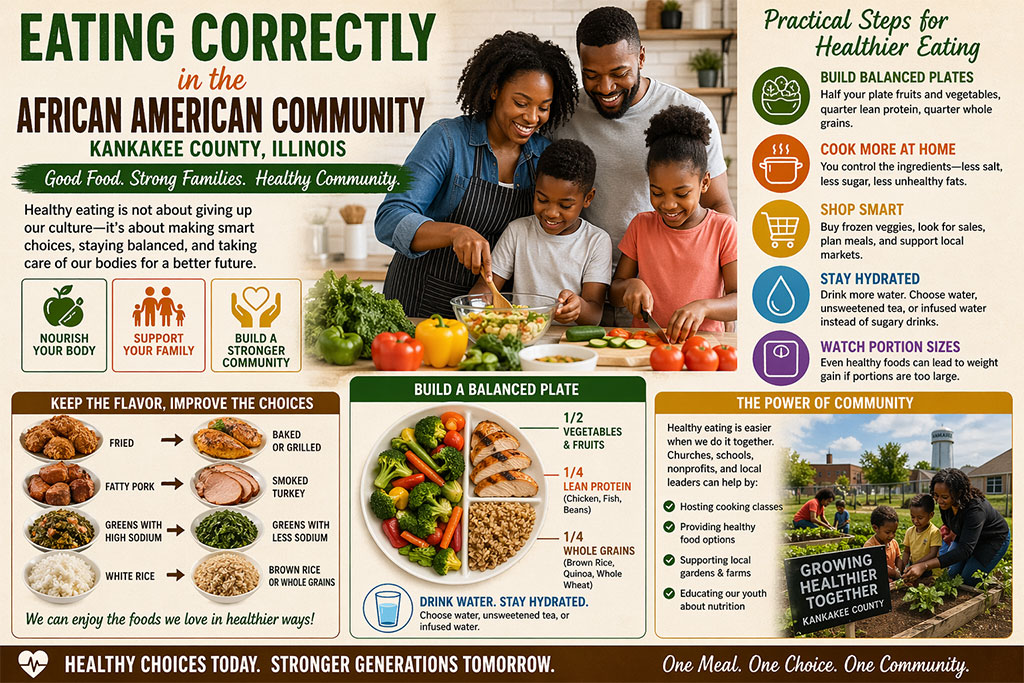
Healthy eating is about how food is prepared and balanced, not eliminating culture. Soul food and traditional meals can still be part of a healthy lifestyle when adjusted: baked or grilled chicken instead of fried, smoked turkey instead of fatty pork for seasoning, fresh greens cooked with less sodium, brown rice or whole grains instead of refined carbs, and reducing added sugar in desserts
Nutrition experts emphasize that all foods can fit into a healthy diet when consumed in balance, and cultural meals should be celebrated, not erased.
Practical Steps for Healthier Eating
For families and individuals in Kankakee County, eating correctly can start with small, realistic changes:
1. Build Balanced Plates
Aim for:
- Half plate: vegetables and fruits
- Quarter: lean protein (chicken, fish, beans)
- Quarter: whole grains (brown rice, whole wheat bread)
2. Cook More at Home
Home-cooked meals allow better control over:
- Salt
- Sugar
- Oils
3. Shop Smart
- Buy frozen vegetables (just as nutritious, often cheaper)
- Look for sales and local markets
- Plan meals ahead to reduce waste
4. Stay Hydrated
Replace sugary drinks with:
- Water
- Infused water (lemon, cucumber)
- Unsweetened tea
5. Watch Portion Sizes
Even healthy foods can lead to weight gain if portions are too large.
Healthy eating becomes easier when it’s done together. Churches, nonprofits, and local organizations in Kankakee County can play a major role by:
- Hosting community cooking classes
- Providing food drives with healthier options
- Supporting local gardens
- Educating youth about nutrition
Social support has been shown to improve diet quality and help individuals maintain healthier habits.
Moving Forward: A Community Approach to Health
Eating correctly in the African American community is not about perfection, it’s about progress. It’s about:
- Making healthier choices more accessible
- Preserving cultural identity while improving health
- Educating the next generation
By combining tradition with knowledge and community support, Kankakee County can continue to move toward a healthier, stronger future – one meal at a time.