

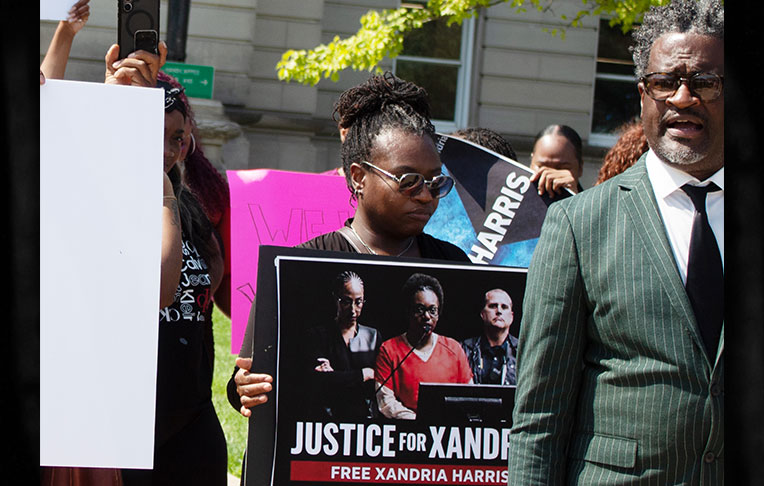
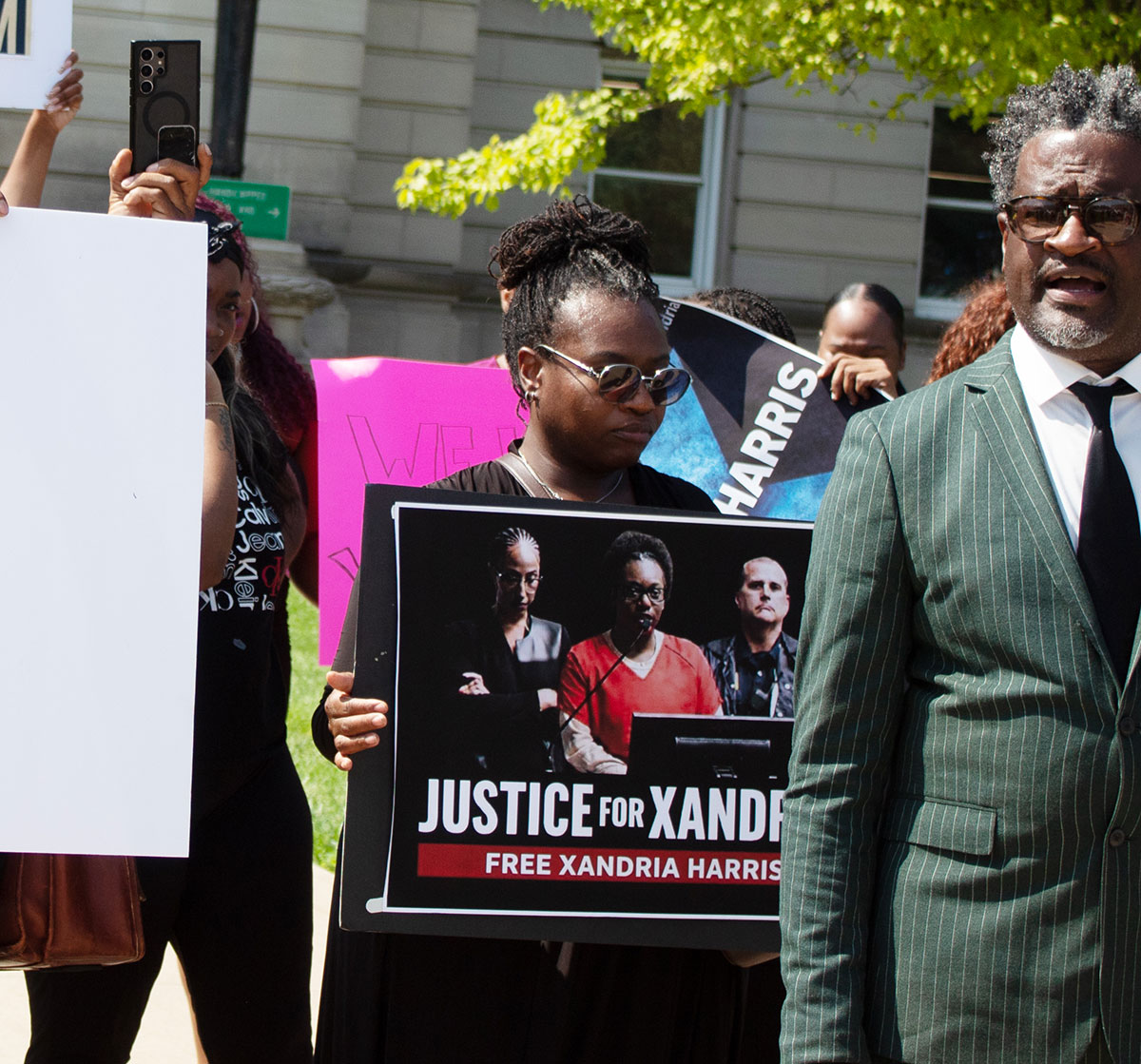
“SHE NEVER HAD A VOICE”: Gloria Boyd Demands Answers In Xandria Harris Case
After nearly five years of court battles, Harris’ mother alleges withheld evidence, unequal treatment and a justice system determined to see her daughter as guilty before her trial is finished.
“They’re not looking at her like she’s a victim. They’re looking at her like she’s some kind of animal.” — Gloria Boyd
For nearly five years, Gloria Boyd says she has watched her daughter, Xandria Harris, become a defendant in a case that has consumed her family, separated a mother from her children and, in Boyd’s view, exposed disturbing questions about fairness inside the courtroom.
Boyd does not mince words. She believes the public has heard only one side of the story. “They try to paint her to be a monster,” Boyd said. “She was not Bonnie to his Clyde. That did not happen.”
That is the central argument behind Boyd’s fight: that Harris should not be judged solely by her association with Darius D. Sullivan or by what happened at the hotel where Sullivan fatally shot an officer. Boyd maintains that her daughter was an abused woman caught inside a violent relationship, not a willing participant in Sullivan’s actions.
And she says the evidence tells a different story from the narrative presented against Harris. One of Boyd’s most pointed questions concerns discovery and
video evidence. Boyd says she did not see body-camera footage involving her daughter until she attended Sullivan’s trial.
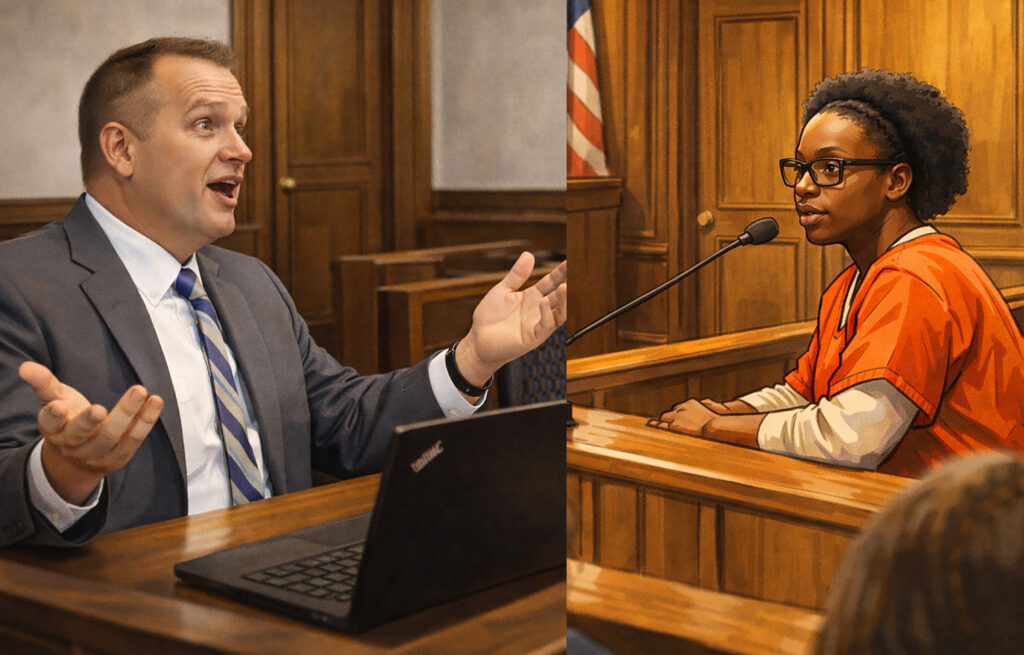
According to Boyd, what she saw did not match statements she says were made publicly or in court by Jim Rowe.
“She never cocked the gun. She never assisted him. She never disarmed the lady,” Boyd said. “She never did none of that.”
Boyd questions why footage connected to Harris has not been made available to the public in the same manner she says footage was presented during Sullivan’s case.
“Darius Sullivan’s trial was aired,” she said. “With Xandria, they do not want the media to be in there for us.”
Those questions go beyond courtroom frustration. They strike at a fundamental issue in any criminal proceeding: What evidence does the public get to see, and what evidence remains hidden? Boyd argues that transparency matters because Harris’ freedom is at stake.
Boyd says the first days after the incident were filled with confusion and fear. She did not know where her daughter was or what had happened. Initially, Boyd says, authorities had a warrant for Sullivan but not Harris. Boyd remembers her daughter being frightened. She also remembers being frightened for Harris’ children.
According to Boyd, Harris repeatedly told officers that her children were inside the hotel room as officers attempted to apprehend Sullivan.
Boyd’s account of the confrontation is stark: she says an officer prevented the door from closing by placing his foot inside it while officers attempted to pull Harris away. Then, she says, Sullivan emerged and began shooting.
Boyd argues that Harris was not controlling Sullivan’s actions and could not have anticipated what he would do. “She was trying to give him the keys to go,” Boyd said. “The lady [police officer] was down on the floor crying.”
Boyd says Harris’ reaction afterward was not that of someone celebrating or participating in violence. She says her daughter was crying and repeatedly asking why Sullivan had done what he did.
A witness, Boyd said, described Harris screaming, “Why did you do that?”
According to Gloria Boyd’s account, Judge Kathy Bradshaw-Elliott took action against Gloria’s son, Xandria Harris’ brother, after he went to the hotel following the shooting.
Boyd says her daughter had called her brother prior to the occurrence and asked him to come pick her up. When he arrived at the hotel, he was at the front desk trying to determine which room Xandria was in when he heard gunshots. Boyd says he ran toward his sister and the children, eventually helping them leave the hotel.
Boyd alleges that despite her son not being involved in the shooting, he was arrested and ultimately received a felony conviction and prison sentence.
Boyd also alleges that police seized her youngest daughter’s vehicle and retained it as evidence, despite her daughter being home asleep and having no involvement in the shooting. “She had nothing to do with it,” Boyd said. “She wasn’t even there.”
Also a very important part of Boyd’s account involves what she says happened before the shooting. Boyd describes Sullivan as abusive toward her daughter and says she did not understand the extent of the alleged abuse until after the incident.
According to Boyd, Harris had police reports and medical records documenting abuse and had sought psychological treatment for depression. Boyd further alleges that Harris sought help through Harbor House, but claims State’s Attorney Jim Rowe disregarded the reports and evidence documenting the abuse. Boyd contends that this history is critical to understanding her daughter’s relationship with Sullivan.
“She was trying to get help from the Harbor House,” Boyd said. “She was going through her psychologist.”
Boyd believes that history demonstrates Harris was not simply a willing partner in Sullivan’s conduct but a woman struggling to escape an abusive relationship.
Boyd also raises serious concerns about Judge Elliott’s involvement in the case. She alleges that Elliott was present at the crime scene and says the judge acknowledged a familial connection to Officer Bailey, describing the relationship as “four times removed.”
Boyd argues that these circumstances created an appearance of conflict and believes Elliott should have recused herself.
Boyd further alleges that comments made during proceedings suggested Harris had already been viewed as guilty before her trial concluded. Those are serious allegations. They are also matters for the court record and legal proceedings to establish, not conclusions that can simply be assumed.
Still, Boyd’s concern is unmistakable. “If you feel like she’s guilty already, you do not need to be the judge,” she said.
Harris’ case has already endured significant procedural turmoil, according to Boyd. She says a jury was selected before the proceedings were stopped and pushed back from February of this year to August. She describes disputes involving prospective jurors, social-media comments and questions of impartiality.
Boyd says another major issue is whether Harris can receive a fair trial in Kankakee County. Her attorney, Cierra Norris, is seeking a change of venue, according to Boyd. That request reflects a larger question: Can a defendant receive a genuinely impartial jury when a case has generated such intense public emotion and community attention?
Boyd says jury selection itself revealed the difficulty. She recalls prospective jurors acknowledging connections, potential bias or familiarity with people involved in the case. For Boyd, those moments reinforced her fear that Harris entered the courtroom fighting more than a criminal charge. She was fighting a public narrative.
Boyd describes Harris as an honor student who had never been in trouble with the law before the events surrounding Sullivan. She says Harris was working at Shapiro when everything happened.
Today, Boyd says her daughter is separated from four children; one daughter and three sons. And Boyd says even behind bars, Harris continues helping others. She speaks Spanish and Mandarin Chinese, Boyd said, and has helped translate for other incarcerated people. She has also participated in Bible study. Boyd says correctional officers and jail personnel have written character letters supporting her daughter.
Yet none of that, Boyd acknowledges, replaces what her grandchildren want most…their mother. “My grandbabies miss their mommy,” she said.
Boyd says there were times she sat alone in court while others filled the room. She describes feeling disrespected and treated differently from families connected to law enforcement. She was also forcibly ordered by the bailiff to surrender her seat; an incident Boyd says underscored what she viewed as the unequal and disrespectful treatment she faced in the courtroom. But instead of retreating, she says the experience hardened her resolve.
“I feel like either we stand for something or we fall for anything,” Boyd said. “So I have to stand for what’s right, my daughter, and anybody else.” That is why she keeps showing up. Why she keeps questioning. Why she keeps demanding that evidence be examined rather than assumed. And why, after years of court appearances, Boyd refuses to accept what she believes is a predetermined conclusion. “They’re only going off emotions and feelings,” she said. “The evidence speaks for itself.”
For Boyd, this is no longer simply about Xandria Harris. It is about whether the justice system can separate association from action, accusation from proof, emotion from evidence and guilt from innocence.
Her message to other families facing similar battles is simple: “Stay strong and focused. Keep praying. Keep fighting. Keep doing what’s right. Never give up.”
Because, Boyd says, when it is your child, you may discover that you are the only person left standing beside them. “And even if nobody else shows up,” she said, “you’re all your child’s got.”