


“Mentally Tired, Not Lazy”: Why Teen Mental Health Is the Defining Issue of 2026
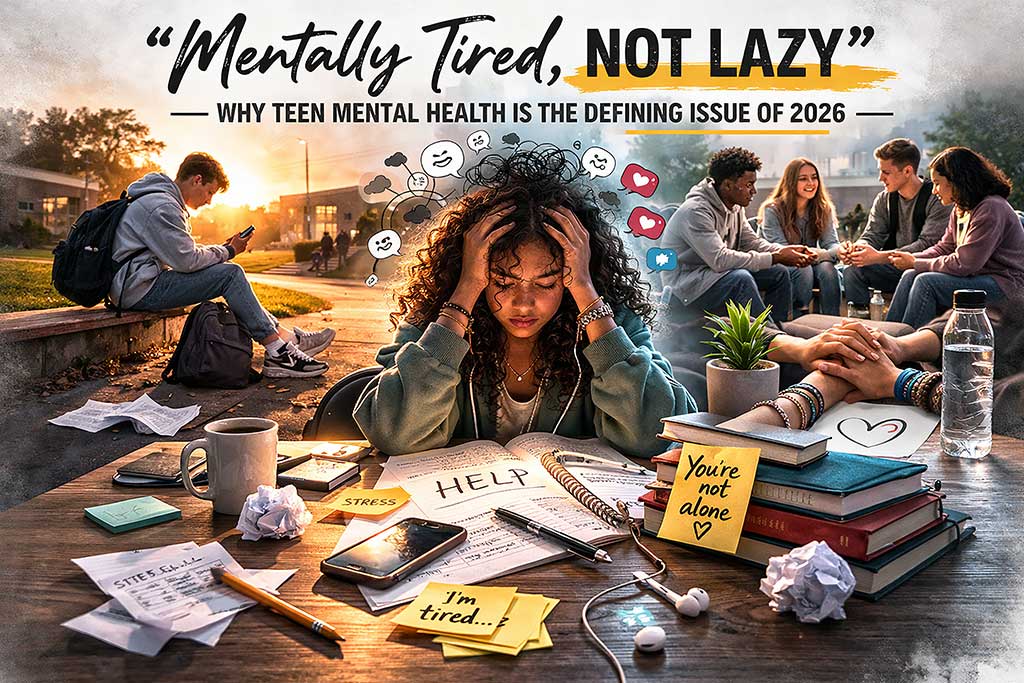
In 2026, the biggest conversation among teens isn’t just fashion, music, or social media trends, it’s mental health. Across schools and communities, young people are openly talking about burnout, anxiety, and emotional exhaustion in ways previous generations rarely did. Many teens describe feeling constantly overwhelmed by academics, social media, family expectations, and the pressure to “have it all together.” As 16-year-old Maya shared, “I’m not sad exactly… I’m just tired all the time, even when I sleep.” Another high school junior explained, “It feels like if you’re not achieving something big, you’re behind.” For a generation raised online, comparison is constant and silence is rare and that nonstop stimulation is taking a toll.
In 2026, the biggest conversation among teens isn’t just fashion, music, or social media trends, it’s mental health. Across schools and communities, young people are openly talking about burnout, anxiety, and emotional exhaustion in ways previous generations rarely did. Many teens describe feeling constantly overwhelmed by academics, social media, family expectations, and the pressure
to “have it all together.” As 16-year-old Maya shared, “I’m not sad exactly… I’m just tired all the time, even when I sleep.” Another high school junior explained, “It feels like if you’re not achieving something big, you’re behind.” For a generation raised online, comparison is constant and silence is rare and that nonstop stimulation is taking a toll.
to “have it all together.” As 16-year-old Maya shared, “I’m not sad exactly… I’m just tired all the time, even when I sleep.” Another high school junior explained, “It feels like if you’re not achieving something big, you’re behind.” For a generation raised online, comparison is constant and silence is rare and that nonstop stimulation is taking a toll.